
Read Chapter One of Facing Fear, Finding You Now for Free
Discover why you've been amplifying dangers that never posed much of a threat to you at all.
In this 20+ page chapter, you'll learn the Four Faces of Fear framework, the Black Cat metaphor that changes how you see internal "dangers," and how unconscious permanent internal fears are sabotaging you. Immediate access, no email needed.
Chapter One: The Faces of Fear is your introduction to becoming an Internal Explorer.


What You'll Discover in Chapter One
The Four Faces of Fear
Most people don't realise fear has four distinct faces:
Physical vs Internal
1 - Physical fears: Heights, spiders, dogs (threats to your body)
2 - Internal fears: Failure, rejection, inadequacy (threats to your sense of self)
Temporary vs Permanent
3 - Temporary fears: Only active when danger is present (fear of dogs appears when you see a dog)
4 - Permanent fears: Active all the time, influencing every decision to avoid the danger (fear of inadequacy affects you all the time)
The most dangerous are unconscious permanent internal fears. These fears are the ones sabotaging you and your happiness every single day. Which they can do because you've been blindly trusting them.
The Black Cat: Your Internal Amplified Danger
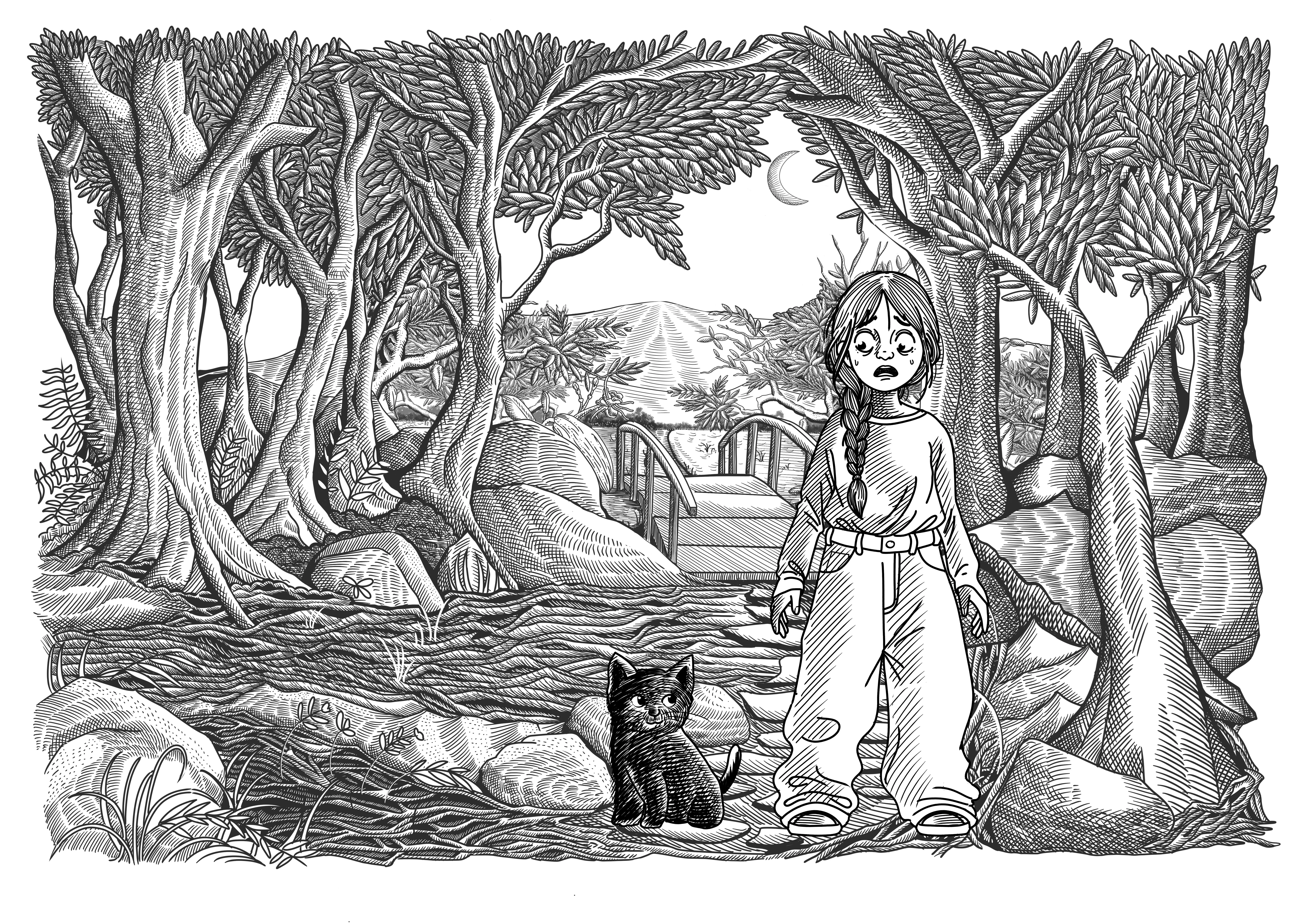
“Imagine yourself walking down a quiet forest path when, suddenly, a sleek black cat appears before you.
You freeze. Your heart pounds with terror.
You’ve heard the rumours of the mythical, dangerous black cats. People say they are witches in disguise. You don’t know what to do. The rumours never explained much else.
The creature doesn’t seem aggressive or angry, but its eyes watch you as it slowly approaches.
You try to move, but your body doesn’t respond.
The cat circles around you, examining you from a safe distance. Its gaze feels heavy, assessing you, deciding whether to make you into its next victim.
You lower your eyes as a sign of submission.
After a few minutes, the cat becomes uninterested. It slinks off into the shadows without a second glance.
You let out a shaky breath, making sure it’s gone before continuing on your journey with nervous steps—terrified of meeting it again.
The black cat is your internal amplified danger. Something you are afraid of, that in reality, doesn’t pose much of a threat to you at all. Sure, it has the potential to scratch or reject you. But any harm will be minimal.”
How you amplify dangers: You only focus on the potential negative consequences of experiencing the danger, not any positive ones. This means you don't have a balanced perspective of the danger's severity.
Examples of Black Cats:
Fear of disappointing others: Amplifying the threat of disappointment so much that you actively make decisions to avoid it everywhere you go.
Fear of failure: Amplifying the consequences of failure to the point where you’ve lost all self belief in your ability to pivot and navigate from any situation.
Fear of judgment: Amplifying judgement so much that you obsess over instances you can remember being judged and make decisions solely to avoid judgement, not based on what makes you happy.
Fear of rejection: Amplifying the harm of rejection to the point that you don’t do anything that could risk it.
What You'll Discover in Chapter One
“What makes these fears particularly dangerous is the unconscious part. You are blindly trusting the information a fear gives you about a danger without assessing it for yourself, and the high significance placed on that danger. By not questioning whether the information is reliable or not, you can’t decide whether it deserves the reaction and focus you’re giving it.
In a way, the fear is deceiving you. It’s making you believe something will cause you terrible internal pain if you experience it. Even when the reality is that it’s usually not a real danger to you at all and will rather aid in your growth and happiness. Yes, you may feel a slight sting from the experience, because that’s what most growth is, but it’s not dangerous.
By believing that it is, though, you are not only living in the constant pain of fear—which, make no mistake, is a painful existence—but when you do experience the “danger,” it’s amplified by your fearful beliefs.”
Unconscious permanent internal fears are the ones that are activated inside of you all the time, making you live in constant fear, while making all decisions to avoid making this fear become reality. These fears sabotage you, and that’s why they’re a danger to you.
Examples of Unconscious Permanent Internal Fears:
Fear of inadequacy
Fear of rejection
Fear of failure
Fear of being powerless
Fear of being controlled
Fear of being judged
What You'll Discover in Chapter One
Option 1: Quick Assessment (15 minutes)

Skim to get a sense of my writing style
Check if the concepts resonate
Decide if you want to continue
Option 2: Deep Dive (30-45 minutes)
Read slowly, and take notes
Work through the reflection prompts
Journal about your own Four Faces of Fear
List potential Black Cats in your life
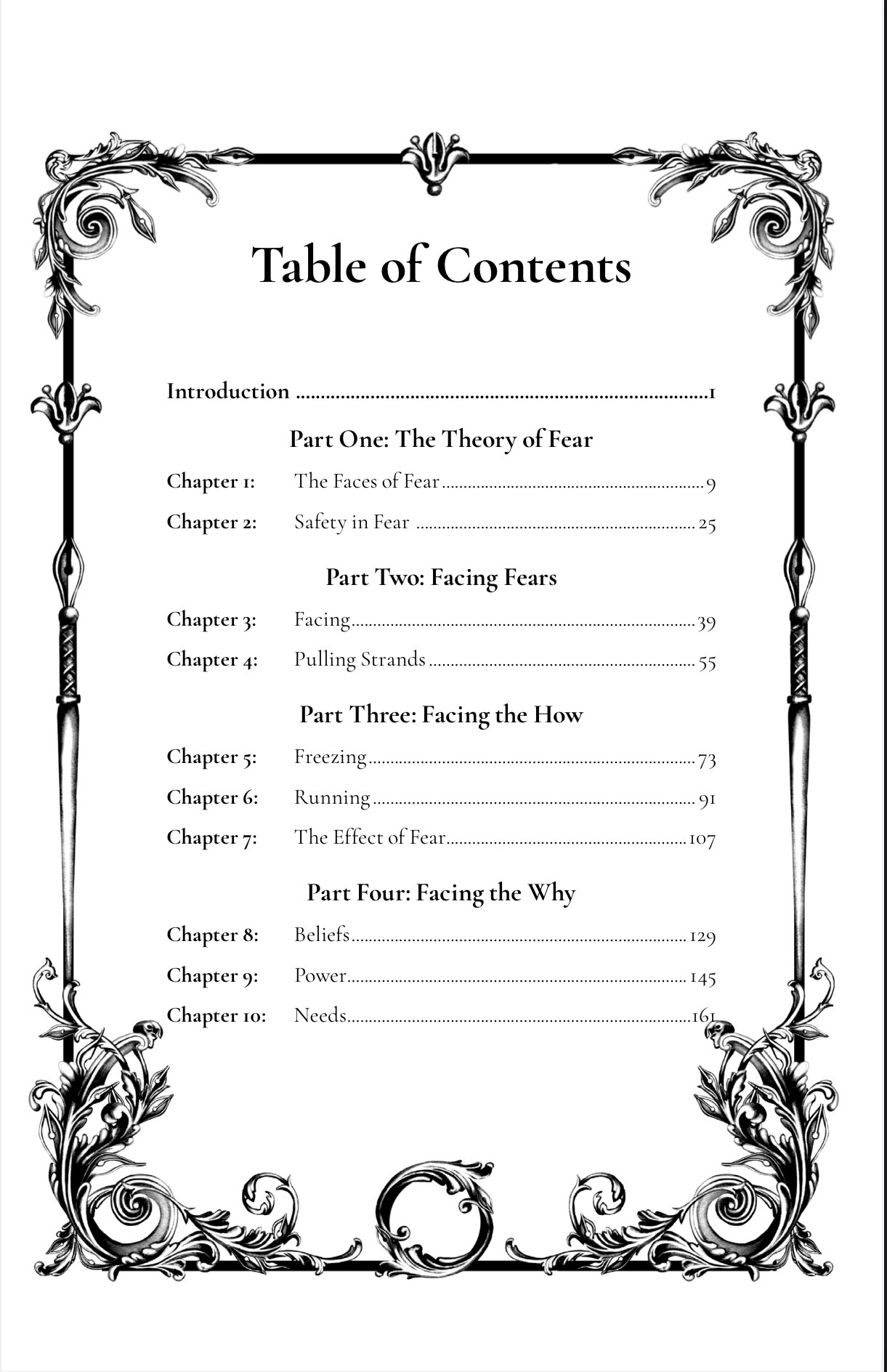
If Chapter One resonates, the full book takes you through:
Safety in Fear (the rats and the killer comfort blanket).
Part Two: Facing Fears (Chapters 3-4)
The Facing process (how to face your fears thoroughly)
Pulling Strands (breaking general fears into specific situations)
Part Three: Facing the How (Chapters 5-7)
Freezing (what the freezing response looks like, and how to change it)
Running (what running looks like, and how to change it)
The Effect of Fear (a comprehensive exploration of how the fear strand is affecting you)
Part Four: Facing the Why (Chapters 8-10)
Beliefs (the types of fears, and how they fuel fear)
Power (the types of powers, and how you can earn some)
Needs (the types of needs, and how you can mistakenly fear them)
Part Five: A Conscious Response (Chapters 11-13)
Principles To Live By (guiding principles for facing fear)
Harnessed Anger (using anger constructively against fear)
Conscious Character Traits (using identity to stop being afraid)
236 pages total. Chapter One is around 20 pages, showing you approximately 8% of the full journey.
Who Should Read Chapter One?
Read Chapter One if:
You're curious about Facing Fear, Finding You but not sure if it's for you
You want to assess the writing style before buying
You're skeptical of self-help books and need proof of value
You've tried everything else and nothing's worked
You want free, actionable insights on fear (even if you don't buy the book)
You're exhausted from constant overthinking and anxiety
You're willing to question fears and beliefs you've been blindly trusting
You're curious about your inner world and are ready to explore
Don't read it if:
You want quick fixes or "5 easy steps"
You prefer clinical approaches based on external research
You're not ready to face your internal fears
You're not willing to do the internal work
You need professional mental health support (please seek professional support instead)
You want a book of collected advice by other people
You're completely happy with your current relationship with fear
Chapter One Extract
Opening paragraphs:
“Fear affects us all—whether you admit it or not.
It’s woven into the fabric of your life with a weight as constant as your memories and beliefs. And as you grow, fear grows with you. Each new responsibility brings a fresh form of fear—even though you didn’t ask for it.
Fear doesn’t knock politely or ask for permission. It barges in, tearing down every strength you’ve built and every piece of wisdom you’ve collected. You feel it in your body first: racing heart, tightening chest, short breaths. Your muscles tense, bracing for a blow. Your mind spirals, reaching for something—anything—to hold on to.
You see, fear makes you vulnerable.
It makes you feel like you’re standing bare in the heart of the Arctic. A relentless invasion whispers lies and makes you believe you’re helpless. Your strength, wisdom, and confidence are turned to paper-thin glass, ready to shatter with the faintest pressure. It steals your focus, your control, your sense of self.
It’s raw and overwhelming. Utterly paralysing.
In short, fear doesn’t care about the truth. No matter what you want or who you are, it forces you to live only for survival—even when your survival is not in question.”
This is the tone and style of the full book. If this resonates, you'll love the rest.
Download Chapter One Now
Instant access, no email required:

Ready to become an Internal Explorer? Subscribe to my newsletter!
You'll receive:
3-email welcome sequence explaining why I wrote this book and who I am
Monthly newsletter with updates
Launch emails whenever I release a new book or project
After Reading Chapter One
If Chapter One resonates:
Option 1: Buy the book
eBook: £12.99 (ikrandhawa.com)
Paperback: £17.99 / $22.99 (Amazon, IngramSpark)
Hardcover: £21.99 / $27.99 (Amazon, IngramSpark)
Option 2: Learn more first
Read reviews from other readers
Learn about the Internal Explorer Protocol
Read the FAQs
Read blog posts about specific fears
Option 3: Share Chapter One
Know someone struggling with fear? Share this free chapter
Book clubs: Download copies for members to assess interest
FAQ'S
Answers
Find answers to common questions about Facing Fear, Finding You.

Q: Do I need to provide my email to download Chapter One?
A: Nope. Instant download is available with no email required. Email delivery is optional if you also want to receive the welcome sequence.
Q: Is Chapter One the same style as what's in the full book?
Q: Can I share Chapter One with others?
Q: Will Chapter One spoil the book?
Q: If I love Chapter One, will I love the full book?
Q: Is Chapter One enough on its own?
Q: How long does it take to read Chapter One?
Q: Can I print Chapter One?